Unrolling Hay
Snowstorm Siestas

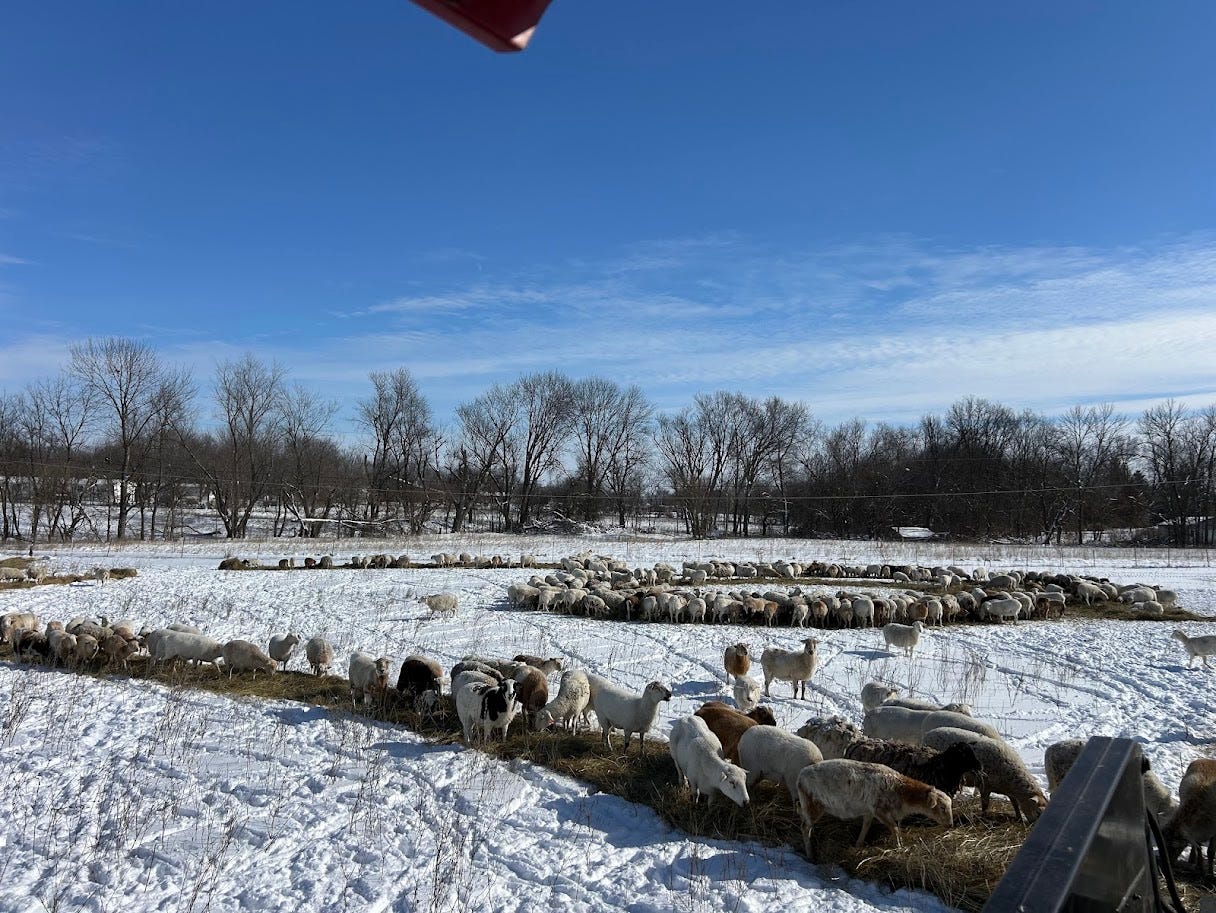
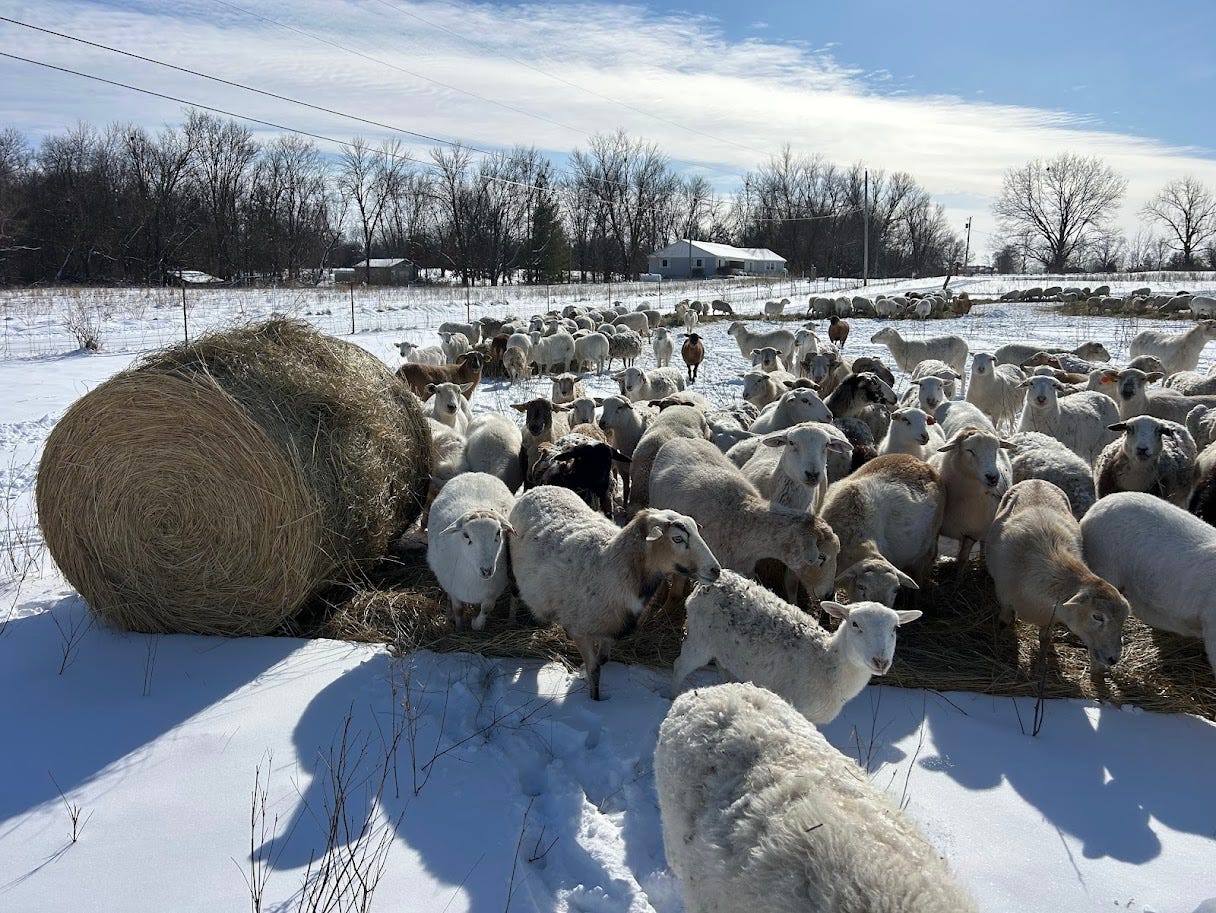
After having a week of 50-60 degree weather in January winter is back in northeast Missouri. The latest snowpocalypse dropped 4-5 inches of fresh powder on the farm yesterday, others south of us were hit with some severe snow and ice storms. The ewes are rather adapt at digging through snow and finding stockpiled forages to get them through. But with a dry fall and an unexpected grasshopper plague our forage supply is hitting a bit of a gap. Our wheat and rye fields are growing but probably won’t be ready for grazing until March. So, we bought some extra bales from neighbors to tide us through February and accomplish one of my favorite goals, “flerdilizing”.
Flerdilzer as I call it is when we unroll hay or bale graze on some of our poorest paddocks during the winter. By doing this it allows us to import nutrients in the form of hay and manure and deposit it on pastures and fields that are a bit lacking. We do not bale any hay on our own land but buy it from hay producers or neighbors. Hay imports nutrients from other farms in a complete nutritional profile that synthetic fertilizers cannot compete with. Where as fertilization of one nutrient or another can throw nutrient ratios out of balance, using our animals rumens to digest plant derived nutrients and recycle them into the soil helps to recycle balanced nutrients and microbes to the soil. The water holding capacity of the soil increases as a result of the “wasted” stems and leaves returning to the soil, making these specific acres more drought resilient as well. 1 ton of orchard grass hay removes roughly 50-17-62 lbs. of Nitrogen, Phosphorous and Potassium, not to mention the oft forgot micronutrients. Most people in our area rarely fertilize hay ground and if they do just focus on NP&K, leading to mineral imbalances that continue to degrade the land. The cost of nutrients removed in that 1 ton of hay as of fertilizer prices today are $30.16 of nitrogen, $14.34 of phosphorous, and $25.01 of potassium, totaling up to $69.51 dollars per ton of hay plus an application charge. So if I as a livestock farmer am choosing to spend my time and energy in growing forages that I can graze and cycle back into my land I am saving approximately $70 ton by not harvesting that forage and that does not count the savings on not having to own hay equipment. On the flip side when I can go buy a 1000lb bale for $40, for easy math, I am importing $35 of nutrients in every bale. I am building the fertility of my pastures by taking note in season of which pastures have struggled in the last year or two and selectively unrolling my hay on those areas. This is a slower “build” than dumping synthetic fertilizer but it seems to be a sustained fertility that is not comparable.
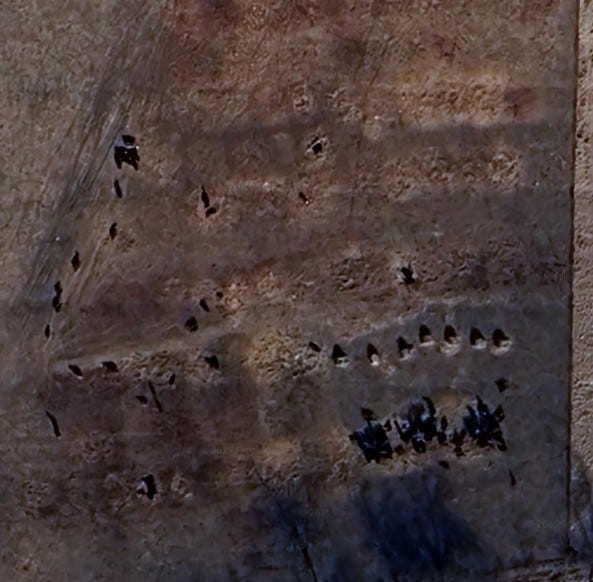
Another thing we have noticed is that with bale grazing we seem to get more and more fungal influence in our pastures. The decaying hay and manure is a breeding ground for fungi and seems to reinvigorate fungal networks that are a bit lacking in our fescue dominated pastures. As the grazing management has changed and we have shifted to longer graze periods we are getting more and more diversity in our remaining “tame” pastures. We have had an influx of clovers, chicory, alfalfa and orchard grass that were planted over 30 years ago but fell out of the pasture sward with continuous grazing and haying. I noticed the first major species shift in 2016 and 17 when I came home from college. As the pasture has become more diverse our animal health has continued to improve.
But if you have the opportunity to bring in hay on poor doing ground and rotationally bale graze around the field I think you will be amazed at changes in your soil structure over the following years. If you have a wet muddy spell and muck it up, all is not lost, you will probably have a flush of weeds for a season as they do their job of covering the soil. But the following year in our experience you have a healthy looking pasture after the weeds have fixed the “mess up”. If you don’t want to look at the weeds you can always buy some annuals like oats or sorghum sudan and spread on the mucked up areas in the spring to outcompete the weeds and cover the area.
Other than that, we are going through the motions of the winter season. Cutting woods, setting posts, feeding livestock and planning for the coming months. We will have a stone mill on the farm in the coming months and heirloom grains in our rotation as we diversify our cropping and try to add another revenue stream by milling them. If anyone has any experience running a stone mill or growing ancient grains (einkorn, emmer, spelt) or spring wheats in the Midwest I would love to pick your brain! We are looking into a tire winder fencing set up for our 4-wheeler to speed up paddock building. And we are prepping to plant honey locusts, persimmons, mulberries, oaks and walnuts in the pasture that I call the “hole” to put some shade in the old row crop (arable) fields. Next week is the first of February and we are going to Ozark Native Seeds to pick up wheatgrass, a 28 acre diverse prairie blend, gamagrass and a forb heavy pollinator mix to plant around the farm. So with snow on the ground still, our planting season will probably begin in the next week as we return the native seeds to their old haunts and flip a few more fields from crop back to perennials. But while it is still cold I will close my eyes and think thoughts of warmers days and wind blown prairies to come!